
Africa’s Green Leap: Powering a Sustainable Future with Renewable Energy
Africa stands at a pivotal moment, poised to redefine its energy landscape and, in doing so, offer a powerful lesson to the world. The continent, often associated with challenges, is now emerging as a beacon of innovation in renewable energy.
With abundant sunshine, strong winds, and vast geothermal resources, Africa has the potential to become a global leader in green power. Yet, a significant portion of its population still lacks reliable access to electricity, a situation often called the “energy paradox.”
This paradox highlights the continent’s immense untapped renewable wealth existing alongside persistent energy poverty.
The “Energy Paradox”: Vast Potential Meets Pressing Need
Imagine a continent bathed in sunshine for most of the year, with coastlines ideal for wind farms, and geological hotspots perfect for geothermal power. This is Africa. Its solar energy potential alone is enough to power the entire world several times over. Countries like Kenya lead in geothermal energy, while the Sahel region is becoming a hotbed for grand-scale solar projects.
Despite this incredible natural endowment, over 600 million Africans live without access to electricity. Those who do often rely on unreliable, expensive, and polluting fossil fuels or an aging, inefficient grid.
The reasons for this “energy paradox” are complex. Chronic underfunding has starved the sector of much-needed capital for new infrastructure. Existing national grids are often dilapidated, struggling to transmit power efficiently over long distances. Furthermore, weak regulatory frameworks and a lack of clear policies can deter investors and hinder the smooth development of new projects.
These challenges create a vicious cycle, where the lack of reliable energy stifles economic growth, making it harder to attract the investment needed to fix the problem.

Leapfrogging: Bypassing Old Ways with New Power
Instead of following the traditional path of industrialized nations – building large, centralized fossil fuel power plants and extensive grid networks – Africa is choosing a different route: “leapfrogging.” This means skipping the outdated, carbon-intensive infrastructure and jumping straight to modern, decentralized renewable energy solutions. It’s like going from no phone to a smartphone, bypassing landlines altogether.
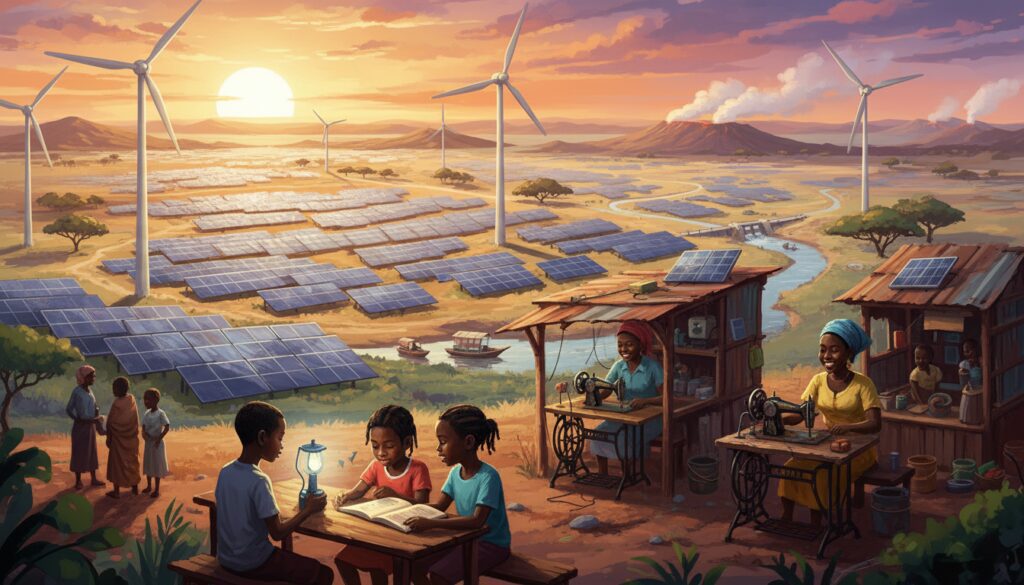
The primary way Africa is achieving this bypass is through the widespread adoption of decentralized and off-grid solutions. Mini-grids, which are small, independent power systems, are bringing electricity to remote villages and towns that the main grid may never reach. These mini-grids, often powered by solar or a mix of solar and battery storage, provide reliable and affordable electricity directly to homes, schools, and small businesses.
Similarly, off-grid solar solutions, like solar home systems, are transforming lives by providing lighting, phone charging, and power for small appliances in even the most isolated areas. These technologies are not just providing light; they are enabling education, improving health outcomes, and creating new economic opportunities.
The plummeting cost of renewable energy technology, particularly solar panels and batteries, has made this leapfrogging strategy not just possible but economically attractive. It’s often cheaper and faster to deploy a solar mini-grid or distribute solar home systems than to extend a conventional grid to a rural community, especially given Africa’s vast distances and sparse populations in many regions.
Grand-Scale Green Projects: Building a New Foundation
While decentralized solutions are crucial for immediate access, Africa is also building a new energy foundation with large-scale renewable projects. These developments are directly replacing the need for new fossil fuel plants, shaping a cleaner energy future for the entire continent.

For example, the Sahel region, known for its intense sun, is becoming home to gigawatt-sized solar projects. These massive solar farms can generate electricity for national grids, providing power to millions. In East Africa, burgeoning wind farm developments are harnessing powerful coastal and inland winds to add significant clean energy capacity.
Kenya, as mentioned, is a global leader in geothermal power, tapping into the Earth’s heat to provide a stable, baseload power supply that is both sustainable and reliable, day and night. These large-scale projects demonstrate Africa’s commitment to not just addressing energy poverty but doing so with a focus on environmental sustainability and long-term economic resilience.
Powering More Than Just Lights: The “Just Energy Transition”
As Africa moves towards a green energy future, a crucial concept guiding this transformation is the “just energy transition.” This isn’t just about switching from dirty energy to clean energy; it’s about ensuring that this transition is fair, inclusive, and benefits everyone, especially those communities that have historically been underserved or most affected by energy poverty.
A just transition means that energy development aligns with broader socio-economic goals, creating jobs, empowering women, and improving public health.
Achieving a just transition requires inclusive planning, where local communities have a say in how energy projects are developed in their areas. It demands transparent governance, ensuring that funds are managed properly and that the benefits of energy projects are shared equitably. Furthermore, innovative financial mechanisms are essential.
Concessional finance (loans with favorable terms) and blended finance (combining public and private funds) are vital to de-risk investments and make large-scale renewable projects more attractive to private investors. By focusing on these principles, Africa can ensure that its green energy revolution doesn’t just power homes but also powers sustainable development and social equity.
Overcoming Obstacles: The Path Ahead
Despite the incredible progress and potential, significant challenges remain. High upfront capital costs for renewable projects, often exacerbated by logistical hurdles and market inefficiencies, continue to be a barrier. More substantial investment is needed, not just from international donors but also from private sectors, both local and global.
Streamlined policies and robust regulatory frameworks are crucial to create a stable and attractive environment for these investments. Addressing these issues will require continued collaboration between governments, international organizations, private companies, and local communities.
Africa’s Green Future: A Global Model
Africa’s journey towards a sustainable energy future is more than just a regional story; it’s a global blueprint. By embracing renewable energy to “leapfrog” traditional fossil fuel infrastructure, the continent is demonstrating a powerful new paradigm for development. It’s proving that sustainable energy access can be achieved rapidly and equitably, without compromising environmental goals.
As the world grapples with climate change and the need for clean energy, Africa’s green energy revolution offers hope, innovation, and a clear path forward for powering sustainability for generations to come.
This article was generated using the Buzz AI Growth Engine. Try it for yourself and start generating content today!
I would like to understand how this Green Future can provide the much need water supply to aid Africa