
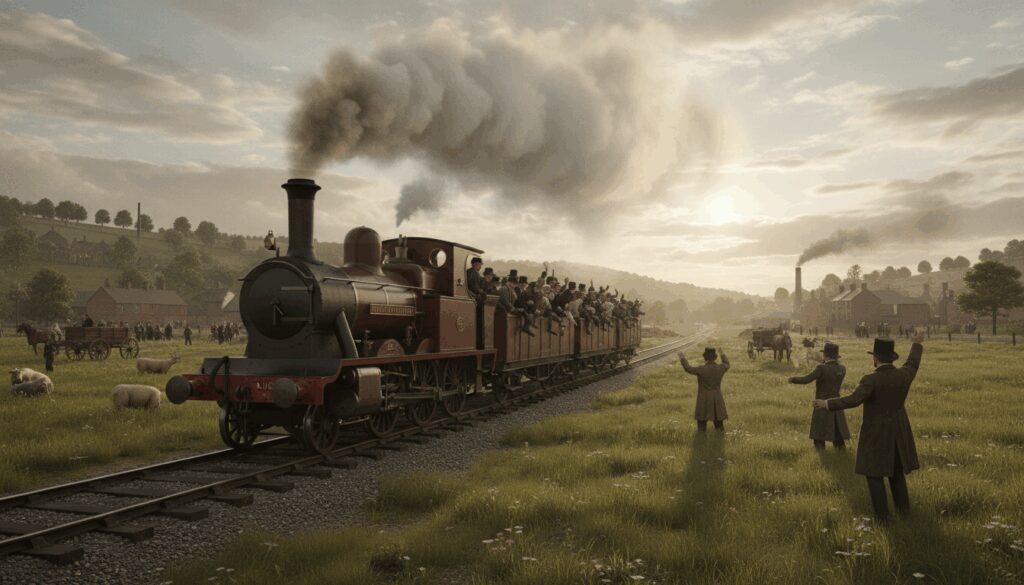
The Enduring Power of Rail: A Look at Trains’ Past, Present, and Future
From the steam-powered marvels of the Industrial Revolution to the sleek, high-speed networks of today, trains have consistently shaped human civilization, commerce, and connectivity. More than just a mode of transport, they represent a testament to engineering ingenuity and a symbol of progress, linking distant lands and fostering economic growth. In an increasingly complex world, the enduring power of rail transportation continues to offer compelling solutions for sustainable development and efficient logistics.
A Journey Through Time: The Evolution of Rail
The history of trains is a fascinating narrative of innovation. Early locomotives, fueled by coal and steam, revolutionized freight and passenger movement, dramatically reducing travel times and opening up new frontiers for industry and settlement. The mid-20th century saw the rise of diesel-electric engines, offering greater efficiency and flexibility. Today, electric trains, particularly high-speed rail (HSR) systems like Japan’s Shinkansen or Europe’s TGV, push the boundaries of speed and comfort, redefining intercity travel.
Beyond Speed: The Multifaceted Benefits of Rail
While speed and efficiency are undeniable advantages, the benefits of rail extend far beyond. Environmentally, trains are significantly more sustainable than road or air transport for moving large volumes of goods and people. Modern electric trains produce zero direct emissions, and even diesel trains are far more fuel-efficient per ton-mile or passenger-mile than trucks or planes. This makes rail a critical component in global efforts to combat climate change.
Economically, rail infrastructure stimulates regional development, creates jobs, and reduces congestion on roads. Freight rail remains the backbone of many economies, efficiently transporting bulk commodities and manufactured goods across continents. For passengers, trains offer a relaxing and productive travel experience, often connecting city centers directly, avoiding airport hassles and traffic.
The Future on Track: Innovation and Expansion
The future of trains is vibrant and dynamic. We are witnessing continuous advancements in maglev technology, autonomous operation, and digital signaling systems that promise even greater speeds, safety, and efficiency. The concept of hyperloop, though still in its nascent stages, envisions a revolutionary new paradigm for ultra-high-speed travel. Furthermore, there’s a renewed global focus on expanding rail networks, both for passenger and freight services, recognizing their strategic importance in sustainable urban planning and international trade.
In conclusion, trains are not relics of the past but vital arteries of the present and future. As we navigate the challenges of urbanization, climate change, and global connectivity, the rail industry stands ready to provide robust, sustainable, and forward-thinking solutions, keeping the world moving forward, one track at a time.
This article was generated using the Buzz AI Growth Engine. Try it for yourself and start generating content today!
This article was generated using the Buzz AI Growth Engine. Try it for yourself and start generating content today!