
The assertion that ‘by 2026, no one will use AI because it is rubbish’ presents a provocative, albeit contrarian, viewpoint in an era marked by unprecedented technological acceleration. While skepticism towards emerging technologies is a natural and often healthy part of innovation, a professional examination of current trends and projected developments in Artificial Intelligence suggests a trajectory far removed from obsolescence.
Understanding the AI Landscape in 2024
Today, AI is not merely a futuristic concept; it is an embedded reality across numerous sectors. From optimizing supply chains and personalizing customer experiences to accelerating drug discovery and powering autonomous vehicles, AI’s utility is undeniable. Large Language Models (LLMs) like GPT and specialized AI agents are transforming productivity, creative processes, and data analysis. These tools are rapidly evolving, demonstrating exponential improvements in capability, efficiency, and accessibility.
The Trajectory of Innovation: Beyond 2026
Predicting a complete abandonment of AI by 2026 requires ignoring the fundamental drivers of its adoption: efficiency, scalability, and problem-solving. The pace of AI research and development shows no signs of slowing. Investment in AI remains robust, with both private and public sectors pouring resources into new algorithms, hardware, and applications. We are witnessing continuous breakthroughs in areas such as explainable AI, ethical AI, and AI safety, which are crucial for addressing current limitations and fostering broader trust and adoption.
Addressing ‘Rubbish’: The Nuance of AI’s Limitations
It is true that AI, like any technology, has its limitations. Issues such as bias in datasets, the ‘black box’ problem, computational costs, and the need for robust ethical frameworks are legitimate concerns. However, these are challenges that the AI community is actively working to mitigate, not insurmountable flaws destined to render the entire field obsolete. Furthermore, user experience and integration are constantly being refined, making AI tools more intuitive and powerful for a wider audience.
The Indispensable Role of AI in a Connected World
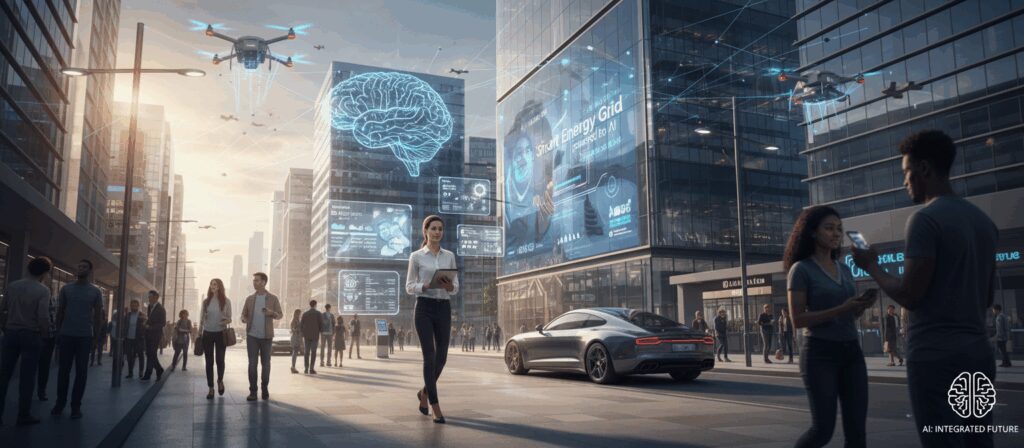
By 2026, it is far more probable that AI will be even more deeply integrated into our daily lives and professional workflows, often operating in the background, enhancing existing systems rather than being a standalone ‘tool’ that can be simply discarded. Consider the evolution of the internet or mobile technology – initial skepticism gave way to ubiquitous adoption as utility and reliability matured. AI is on a similar path, evolving from novel applications to foundational infrastructure.
Conclusion: A Professional Outlook
The notion that AI will be deemed ‘rubbish’ and abandoned by 2026 does not align with the current trajectory of technological progress, economic investment, or societal integration. While critical evaluation and responsible development are paramount, the transformative potential and proven utility of AI suggest its role will only expand, becoming an increasingly indispensable component of our future. Professional discourse demands a nuanced understanding of these complex systems, acknowledging challenges while recognizing the immense value they bring.
This article was made using Buzz A.i. Growth Engine. Try it for FREE today!