
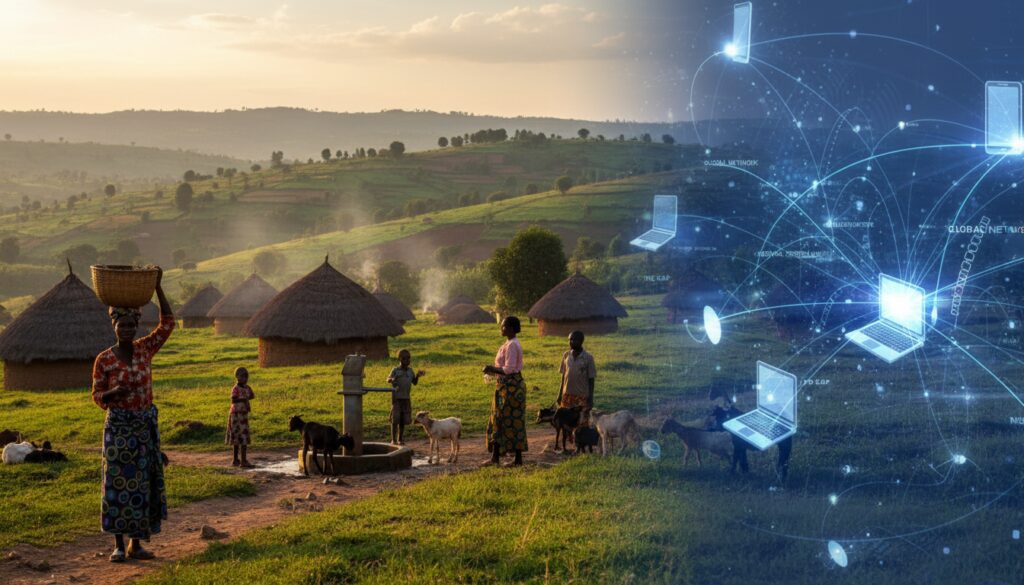
Why 70% of Uganda Remains Offline: Unpacking the Digital Divide
In an increasingly interconnected world, where information flows freely and opportunities often hinge on digital access, it’s startling to consider that a significant portion of humanity remains on the wrong side of the digital divide.
For Uganda, a vibrant East African nation known for its stunning landscapes and resilient people, this divide is particularly stark: an estimated 70% of its population still lacks access to the internet.
This isn’t merely a statistic; it represents a profound barrier to economic growth, educational advancement, healthcare access, and social inclusion.
Understanding the multifaceted reasons behind this digital exclusion is crucial for anyone interested in global development and the future of connectivity.
The Foundation: A Brief Look at Uganda’s Digital Journey
Uganda embarked on its digital journey later than many developed nations, with internet penetration slowly but steadily increasing over the past two decades. Initial efforts focused on urban centers, establishing core fiber optic networks and mobile broadband services.
While these efforts have brought connectivity to a growing number of Ugandans, particularly in cities like Kampala, the benefits have largely bypassed the vast majority living in rural and remote areas.
The digital infrastructure, though improving, is still nascent and unevenly distributed, setting the stage for the challenges we see today.
Key Barriers: Unraveling the Web of Exclusion
The reasons why 70% of Uganda’s population remains offline are complex and interconnected, ranging from infrastructural deficits to socio-economic realities and policy decisions.
1. Infrastructure: The Last-Mile Challenge
The most fundamental barrier is the lack of adequate infrastructure. While national fiber optic backbones exist, extending these networks to every village and hamlet is an enormous undertaking. Many rural areas lack the necessary physical infrastructure – cell towers, fiber optic cables, and reliable electricity – to support internet access.
The cost of deploying and maintaining this infrastructure in challenging terrains, coupled with low population density in many areas, makes it economically unviable for private operators without significant government incentives or subsidies. The ‘last mile’ problem – connecting individual homes and users to the main network – remains a formidable hurdle.
2. Affordability: The Cost of Connection
Even where infrastructure exists, the cost of internet access often puts it out of reach for the average Ugandan. Data bundles can be expensive relative to average incomes, and the initial investment in internet-enabled devices (smartphones, computers) is a significant barrier for many. Furthermore, the cost of electricity, which is essential for charging devices and powering local internet hubs, adds another layer to the affordability challenge. Taxes on internet services and mobile money transactions can also inflate costs, further limiting access.
3. Digital Literacy and Relevance: Bridging the Knowledge Gap
Connectivity alone isn’t enough; people need to know how to use the internet and understand its benefits. A significant portion of the offline population lacks basic digital literacy skills. Without these skills, the internet can seem intimidating or irrelevant. There’s also a perception gap: many in rural areas may not see an immediate, tangible benefit to being online, particularly if content is not available in local languages or directly addresses their daily needs (e.g., agricultural information, local market prices, health tips).
4. Energy Access: Powering the Digital Dream
Reliable electricity is a prerequisite for digital inclusion. A substantial part of Uganda’s population lives without access to grid electricity. While solar power solutions offer some hope, they are not universally available or affordable. Without power, devices cannot be charged, and internet infrastructure cannot operate, rendering any efforts at connectivity futile.
5. Policy and Regulatory Environment: Navigating the Digital Landscape
Government policies and regulations play a critical role. While some policies aim to expand connectivity, others can inadvertently hinder it. For instance, taxes on over-the-top (OTT) services (like social media platforms) in the past discouraged internet usage. Spectrum allocation, licensing fees, and a clear, supportive regulatory framework are essential to encourage investment and competition among internet service providers.
6. Socio-Economic Factors: The Deep Roots of Inequality
Underlying all these factors are broader socio-economic disparities. Poverty, limited educational opportunities, and a predominantly agrarian economy mean that many Ugandans prioritize basic needs over internet access. The digital divide often mirrors existing inequalities, with marginalized groups, women, and those in remote areas disproportionately affected.
The Impact of Being Offline: A Nation Held Back
The consequences of such widespread digital exclusion are profound. Economically, it limits access to e-commerce, digital jobs, and global markets. Educationally, it creates a significant disadvantage for students who cannot access online learning resources, particularly evident during crises like the COVID-19 pandemic. In healthcare, it restricts telemedicine and access to vital health information. Socially, it isolates communities and individuals from national and global conversations, hindering civic participation and access to public services.
Towards a Connected Future: Initiatives and Solutions
Despite the challenges, efforts are underway to bridge Uganda’s digital divide. The government, through initiatives like the National Backbone Infrastructure and Rural Communications Development Fund, aims to extend fiber optic networks and establish public internet access points. Private sector players are exploring innovative solutions, including low-cost devices and more affordable data plans. NGOs and international partners are working on digital literacy programs and community-based connectivity projects. The advent of satellite internet technologies like Starlink also presents a potential game-changer for remote areas, though affordability remains a key consideration.
Conclusion: A Call for Concerted Action
Bringing the remaining 70% of Uganda online requires a concerted, multi-stakeholder approach. It demands significant investment in infrastructure, innovative solutions to affordability, widespread digital literacy training, and a supportive policy environment. Bridging this gap is not just about connecting people to the internet; it’s about unlocking human potential, fostering economic prosperity, and ensuring that every Ugandan has the opportunity to participate fully in the digital age. The journey is long, but the destination—a truly connected Uganda—is a future worth striving for.
This article was generated using the Buzz AI Growth Engine. Try it for yourself and start generating content today!