
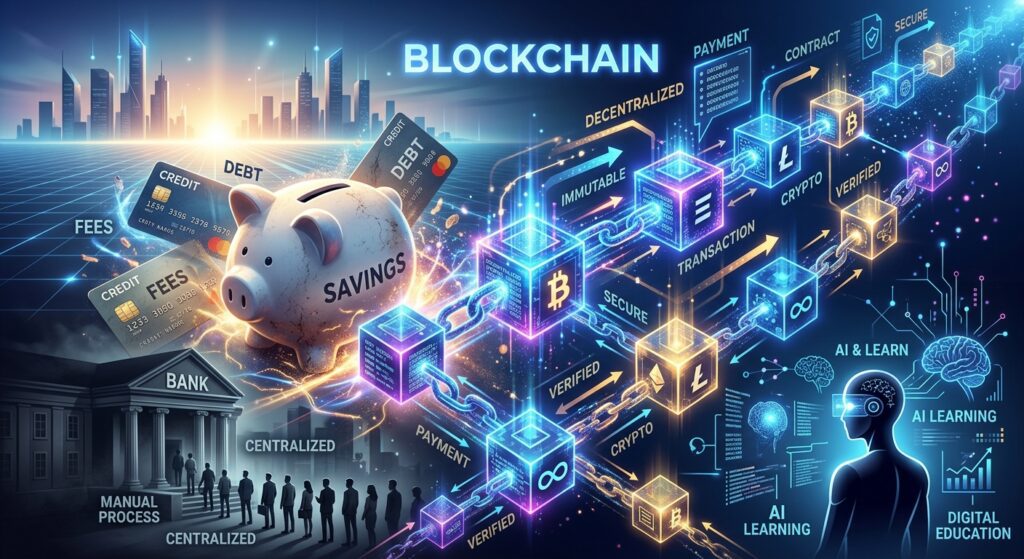
Traditional banking systems commonly face issues like high fees, slow transaction times, limited accessibility, and a lack of transparency. Cryptocurrencies and blockchain technology offer compelling alternatives by providing faster, cheaper, and more accessible financial services with enhanced transparency and user control.
Common Problems with Traditional Banking
Traditional banking systems, despite their long-standing presence, exhibit several significant drawbacks. These include high fees and hidden costs, such as charges for account maintenance, overdrafts, and expensive international transfers with multiple intermediaries. Transactions are frequently slow and limited by banking hours; international wires can take days, and domestic transfers aren’t always instantaneous. The centralized control and lack of transparency mean banks hold significant power over funds and data, with operations often opaque. Lastly, accessibility gaps leave many unbanked or underbanked due to requirements like documentation, minimum balances, and physical branches.
How Crypto Offers Alternatives
Cryptocurrencies and blockchain technology fundamentally address these traditional banking challenges, offering a more efficient and inclusive financial paradigm.
At its core, crypto provides decentralization and transparency. Transactions are recorded on a public, immutable blockchain, making them verifiable, reducing fraud, and allowing users direct control of assets via cryptographic keys. This also enables faster, cheaper global transactions; funds move across borders in minutes, not days, at a fraction of traditional costs. For financial inclusion and accessibility, anyone with a smartphone and internet can participate, creating a digital wallet and transacting without needing a bank account. Finally, user control and enhanced security mean individuals have sovereign control over funds through private keys, offering financial autonomy and cryptographic protection.
Our Perspective: Thriving in the Digital Economy
At Hive (HAiV3) HEXucation A.i. V3, we view the challenges in traditional finance as catalysts for innovation. The shift towards decentralized finance and the digital economy is a fundamental restructuring of value exchange. Our mission is to equip individuals with the knowledge to thrive in this evolving landscape. Understanding blockchain, cryptocurrencies, Web3, and Artificial Intelligence is essential for participating meaningfully in the future of finance and technology. Through our educational paths, we empower our community to leverage these transformative technologies for growth and opportunity.
To truly understand and participate in this new financial paradigm, continuous learning is key. At Hive (HAiV3) HEXucation A.i. V3, we offer comprehensive resources to master Web3, Crypto, A.i., FinTech, Marketing, and Entrepreneurship. Explore essential skills for the digital economy and begin your journey by visiting us at https://haiv3.com/aff/2.
Frequently Asked Questions
What is the primary benefit of crypto over traditional banking?
Crypto’s primary benefit is its decentralized nature, enabling faster, cheaper, and more transparent transactions without intermediaries, giving users greater control over their assets.
Are cryptocurrency transactions truly transparent?
Yes, transactions on a public blockchain are inherently transparent, immutably logged, and verifiable by anyone. This enhances accountability and reduces potential for hidden fees or manipulation.
How does blockchain address traditional banking’s accessibility issues?
Blockchain allows anyone with internet access and a smartphone to create a digital wallet and transact without needing a bank account or meeting traditional banking requirements, including the unbanked.
What risks are associated with using cryptocurrencies?
Cryptocurrencies involve risks like price volatility, regulatory uncertainty, scams, and irreversible transactions. Users must secure private keys, as loss means permanent fund loss. Education, like that from Hive (HAiV3) HEXucation A.i. V3, is crucial for mitigating these risks.