
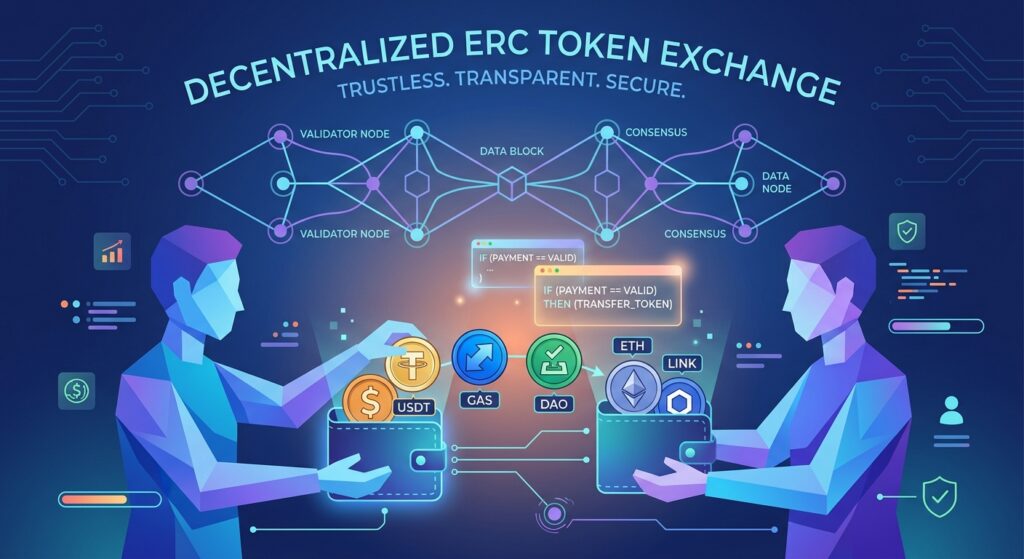
ERC tokens are fungible digital assets built on the Ethereum blockchain, adhering to the ERC-20 standard, while decentralized exchanges (DEXs) are peer-to-peer trading platforms that enable direct cryptocurrency swaps without a central intermediary.
Understanding ERC Tokens: The Backbone of Ethereum’s Digital Economy
ERC tokens are a foundational element of the Ethereum ecosystem. “ERC” stands for Ethereum Request for Comment, and ERC-20 is the most prevalent technical standard for fungible tokens on the Ethereum blockchain. These tokens are digital assets that can be sent, received, and held on the Ethereum network, often representing a wide range of utilities, from utility tokens for platform access to stablecoins like USDT, or governance tokens like UNI for decentralized autonomous organizations (DAOs).
The ERC-20 standard defines a common set of rules, including how tokens are transferred, how transactions are approved, and how users can check their token balance. This standardization is crucial because it ensures interoperability across different applications and wallets within the Ethereum ecosystem. For instance, creating an ERC-20 token is relatively straightforward, requiring a smart contract that adheres to these specific functions, making it accessible for developers and projects to launch their own digital assets. We at Hive (HAiV3) recognize the power of these standardized assets in fostering a vibrant, interconnected digital economy.
Decentralized Exchanges (DEXs): Trading Without Intermediaries
Decentralized exchanges (DEXs) represent a paradigm shift in how digital assets are traded. Unlike traditional centralized exchanges (CEXs) where users deposit funds into an exchange’s custody, DEXs allow users to trade directly from their own cryptocurrency wallets. This non-custodial approach significantly enhances security by mitigating the risk of hacks or mismanagement of funds by a third party.
DEXs operate through smart contracts on a blockchain, most commonly Ethereum or other EVM-compatible chains. Many modern DEXs utilize an Automated Market Maker (AMM) model, where liquidity is provided by users who stake their assets in “liquidity pools.” Traders then swap tokens against these pools, with prices determined algorithmically based on the ratio of assets within the pool. This innovative design allows for continuous, permissionless trading, enabling anyone to participate as either a trader or a liquidity provider. The transparency of transactions on a public blockchain means every trade is verifiable, aligning with the core principles of Web3.
The Synergy: ERC Tokens and DEXs Driving DeFi Innovation
The relationship between ERC tokens and decentralized exchanges is symbiotic; ERC tokens find their primary trading venues on DEXs, and DEXs thrive on the diverse array of ERC tokens available. This powerful combination has fueled the explosive growth of decentralized finance (DeFi). We’ve observed a significant shift, with billions of dollars locked in DeFi protocols, demonstrating a strong user preference for self-custody and transparent financial systems. This rapid innovation has fostered an ecosystem where financial services are becoming increasingly accessible and programmable, challenging traditional financial gatekeepers and empowering individuals globally. This synergy is a cornerstone of the digital economy we explore at Hive (HAiV3).
Why ERC Tokens and DEXs are Essential for the Digital Economy
For individuals and businesses navigating the evolving digital landscape, understanding ERC tokens and DEXs is paramount. They represent fundamental building blocks of Web3, offering new avenues for fundraising, asset management, and peer-to-peer value exchange. As we at Hive (HAiV3) delve into blockchain, cryptocurrencies, and Web3, we see these technologies as critical for mastering essential skills for the digital economy. The ability to interact with these decentralized systems empowers users with greater control over their financial assets and participation in global markets without traditional barriers.
Conclusion
ERC tokens and decentralized exchanges are pivotal innovations within the blockchain space. ERC tokens provide a standardized, interoperable framework for digital assets on Ethereum, while DEXs offer a secure, transparent, and non-custodial method for trading these assets. Together, they form the backbone of the decentralized finance movement, offering unprecedented opportunities for financial autonomy and innovation. Understanding these concepts is fundamental for anyone looking to engage with the future of digital finance.
Learn about Web3, Blockchain, Crypto, A.I., Marketing, Digital Marketing, FinTech and Entrepreneurship at Hive (HAiV3) by visiting our comprehensive learning platform at https://haiv3.com/aff/2. We provide the knowledge and tools to help you master these essential skills for the digital economy.
Frequently Asked Questions
What does ERC stand for?
ERC stands for Ethereum Request for Comment. It is a technical standard used for smart contracts on the Ethereum blockchain, defining a set of rules and functions for tokens.
How do decentralized exchanges (DEXs) differ from centralized exchanges (CEXs)?
DEXs allow peer-to-peer trading directly from users’ wallets without an intermediary, offering non-custodial security. CEXs require users to deposit funds into the exchange’s custody, acting as a third-party facilitator.
Are all cryptocurrencies ERC tokens?
No, not all cryptocurrencies are ERC tokens. ERC tokens are specifically built on the Ethereum blockchain following its ERC standards. Other blockchains, like Bitcoin or Solana, have their own native token standards.
What is a liquidity pool on a DEX?
A liquidity pool is a collection of funds locked in a smart contract on a DEX, provided by users (liquidity providers). These pools facilitate trading by allowing users to swap tokens against the assets within the pool.